Most plant failures we see in Fairfield County come from the soil, not the plant. Heavy clay stays wet in spring and cracks in August. Deer walk through every night. Road salt and plow spray land along the curb, and homes near the Sound get salty wind on top of that. A planting plan has to start with those conditions, then make the yard look good twelve months a year.
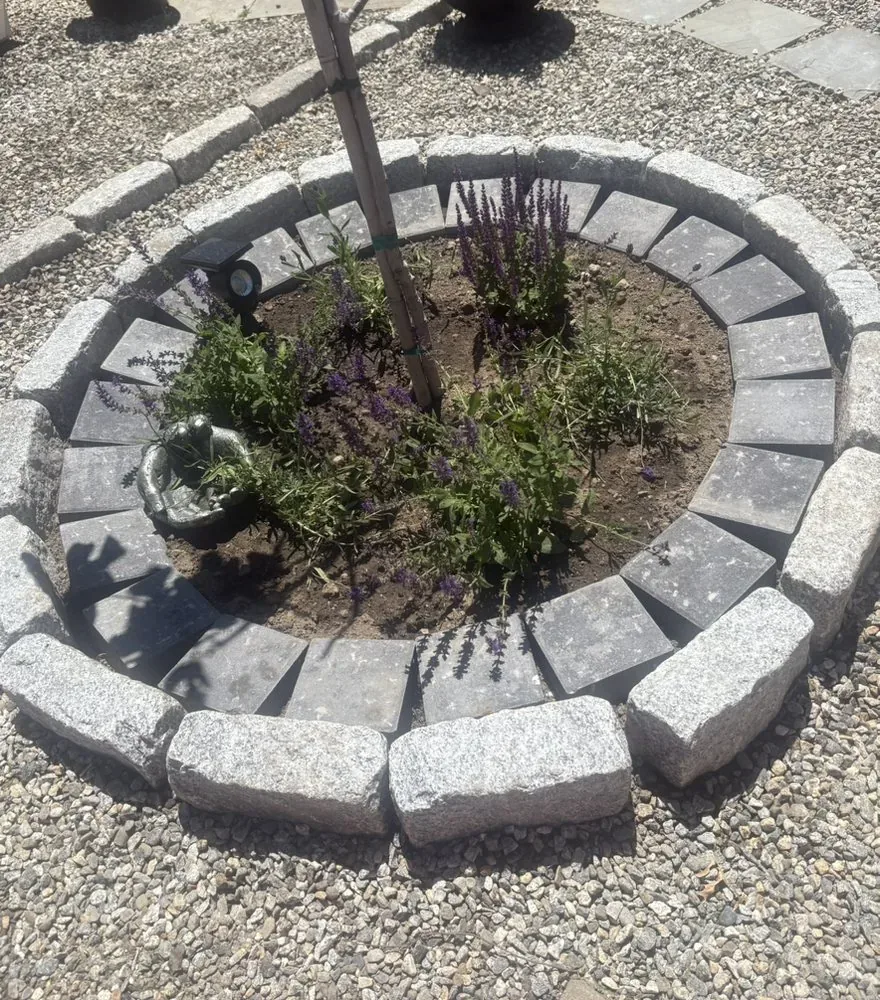
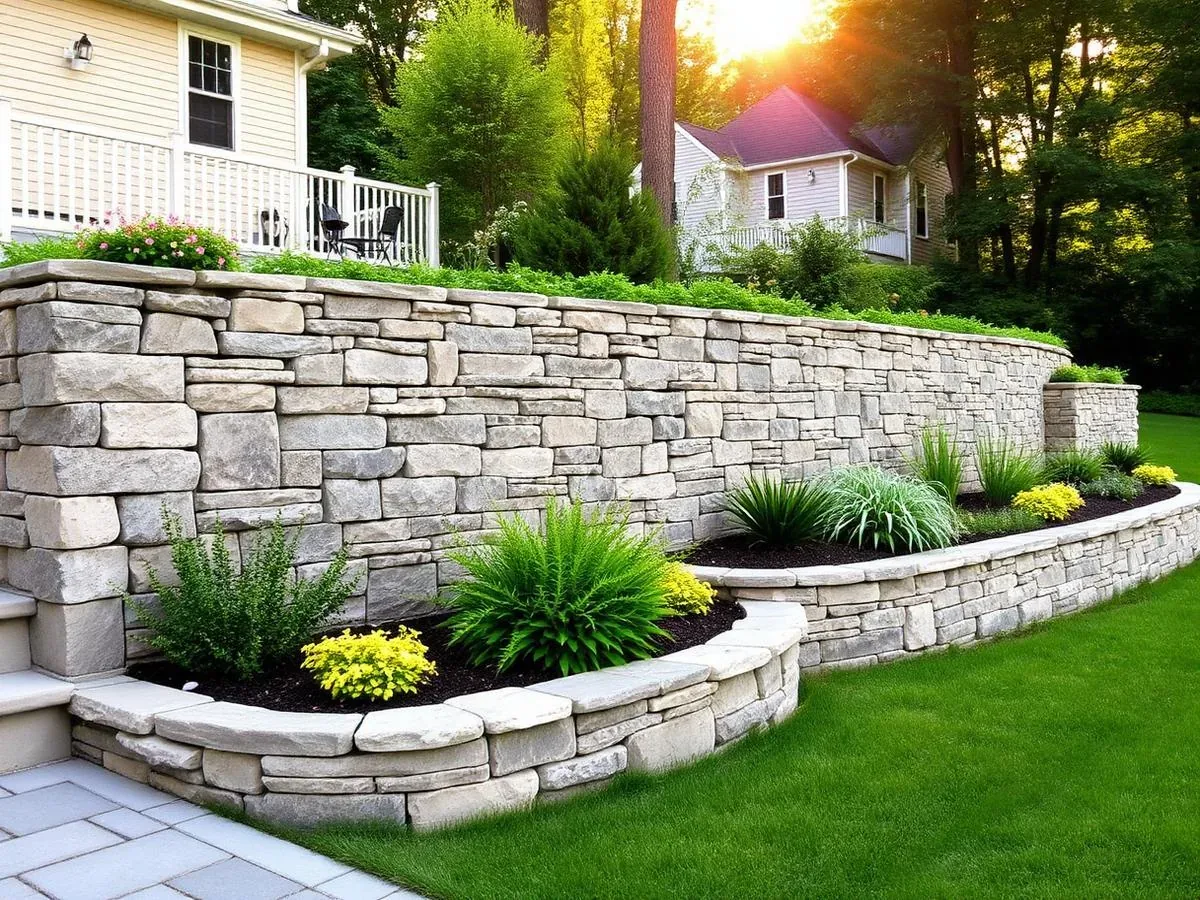
Because we build the stone and plant the garden, the grades, drainage and sight lines all agree with each other. Beds are shaped around the walls and walks, not squeezed in afterwards.
What we plant
Foundation plantings
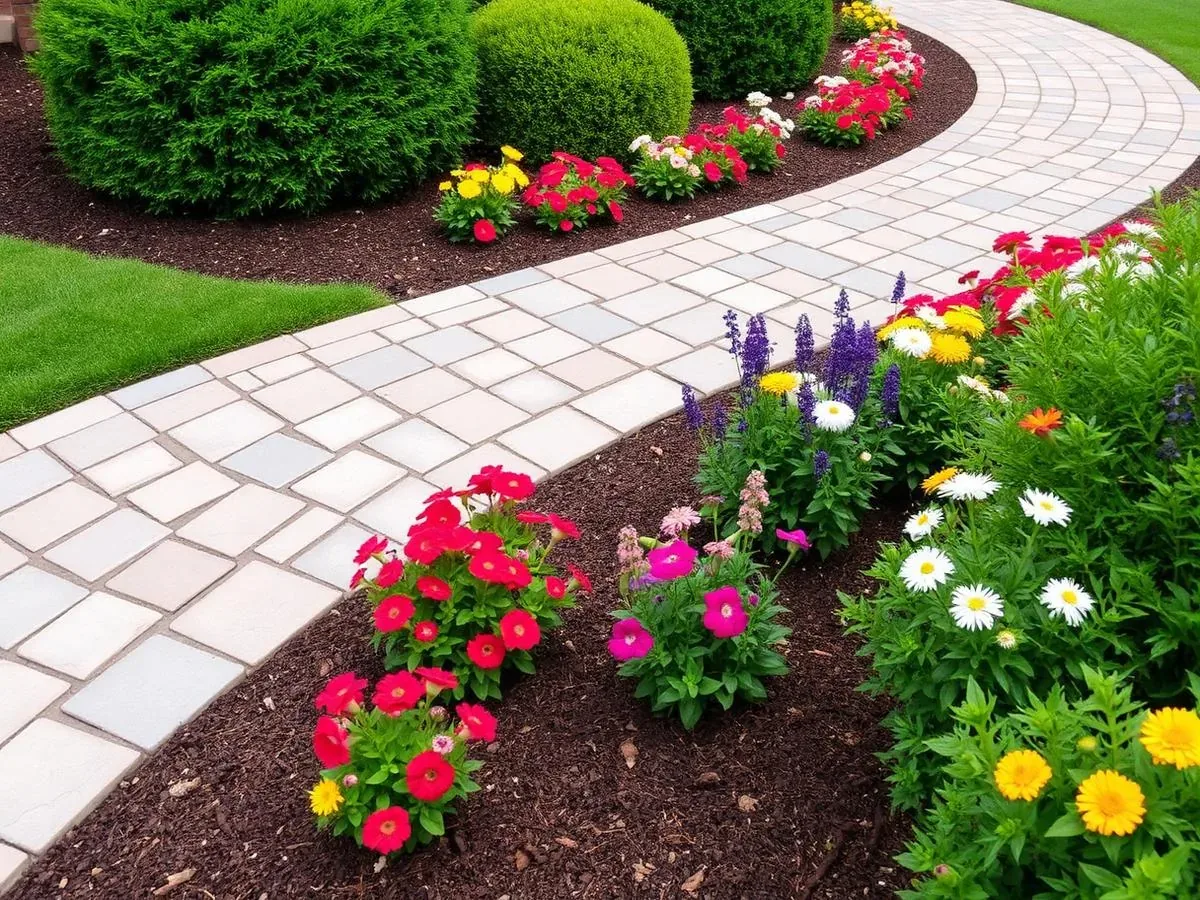
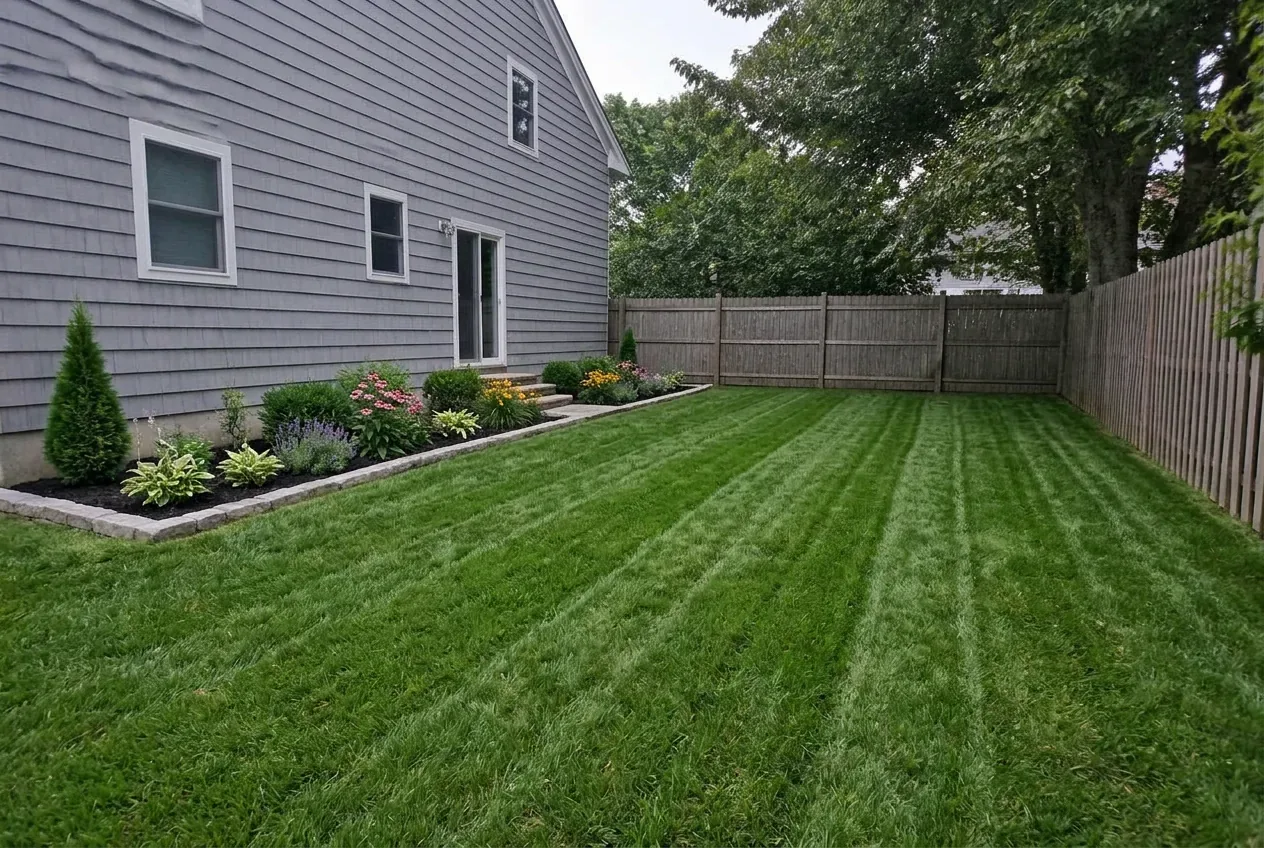
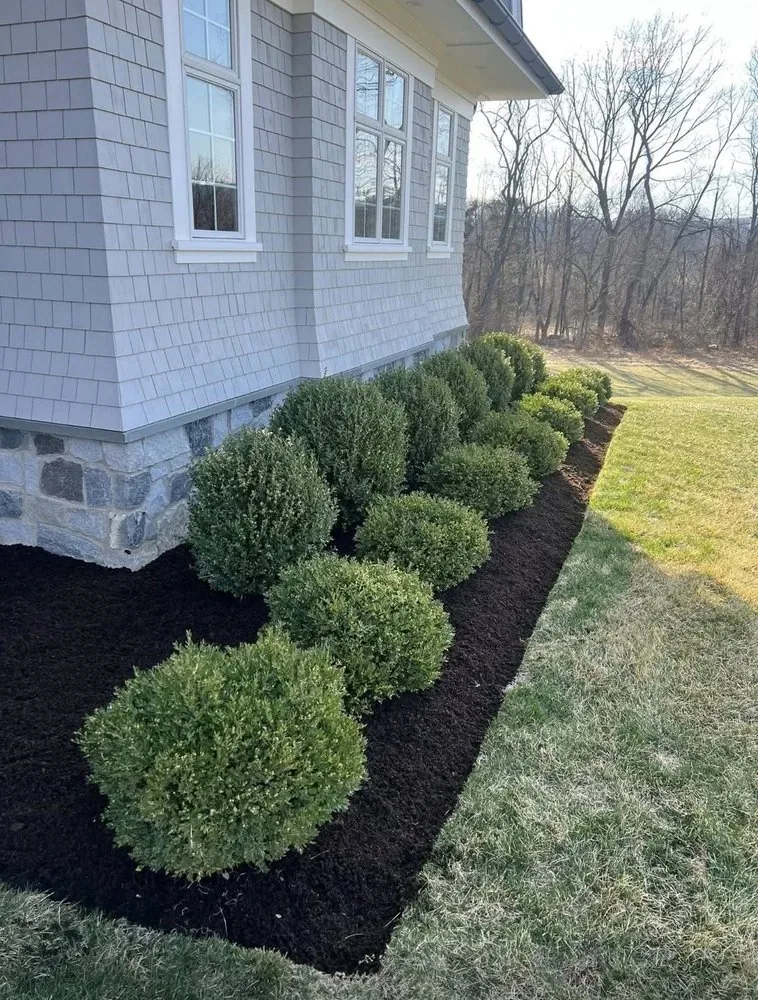
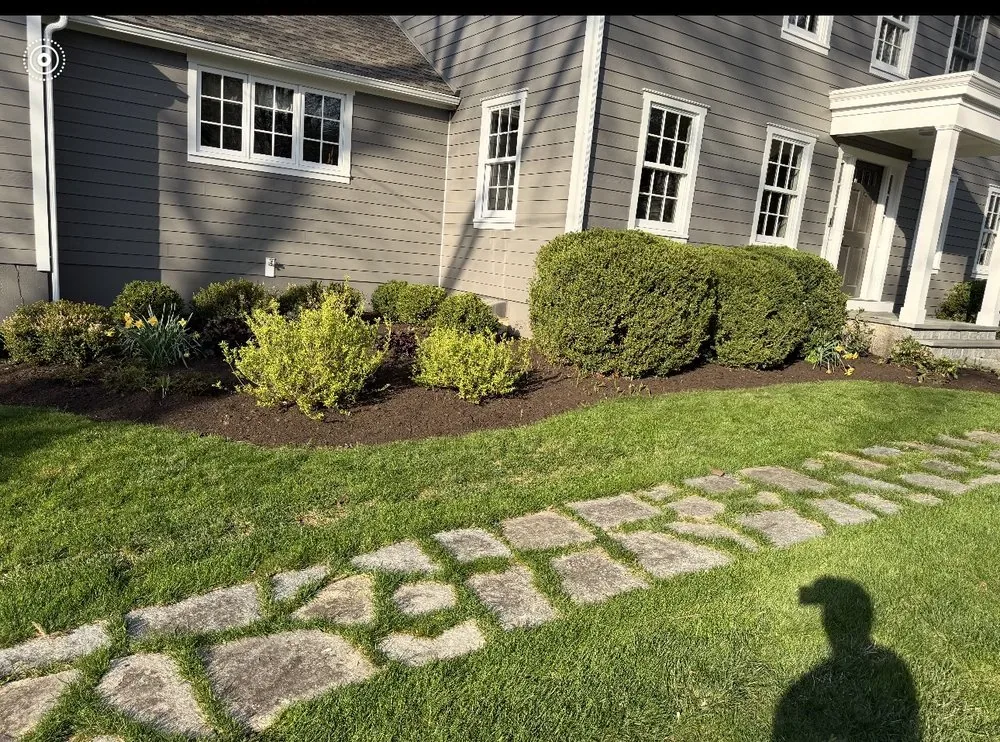
The beds along the front of the house are the first thing everyone sees. We mix a few evergreens for winter structure, grasses for movement, and a run of bloom from late-winter hellebores to late-summer summersweet, sized so they won’t swallow the windows in five years. Along wet foundations, natives like inkberry holly handle clay that boxwood struggles in.
Privacy screening
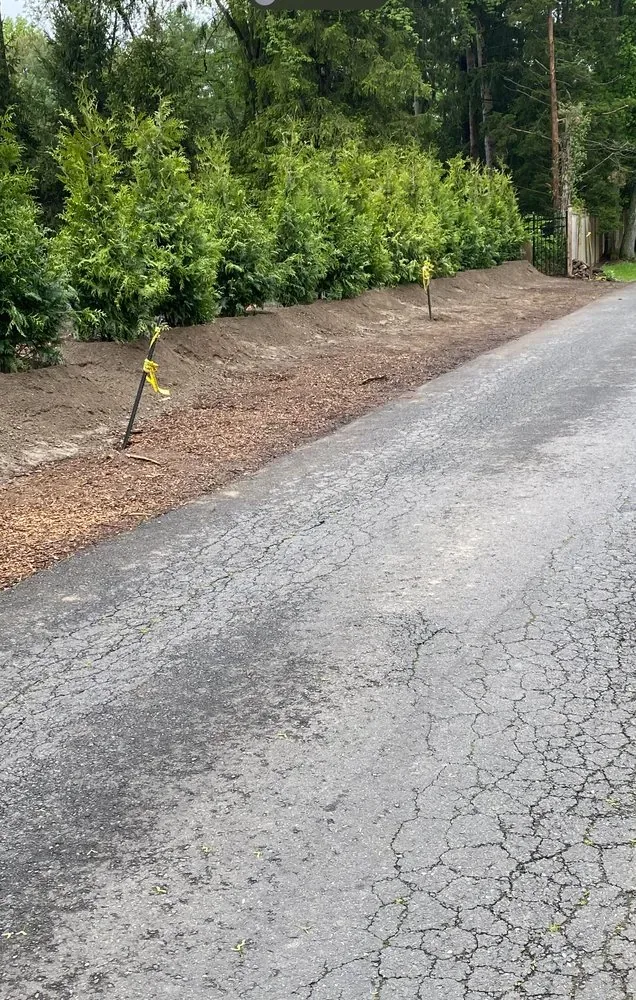
Evergreen screens along a driveway, a property line or a neighbor’s new addition. Arborvitae is a common choice, but deer browse it hard in many neighborhoods, so we talk through mixed screens of evergreens and tough native shrubs where deer pressure is high. We grade and prepare the strip before planting so the screen grows evenly from end to end.
Perennial gardens
Borders and beds of long-lived perennials and grasses chosen for sun, soil and deer traffic. Catmint, false indigo, ornamental onion, little bluestem and switchgrass all do well here when the bed is prepared properly. We leave grasses standing through winter for structure and cut them back in early spring.
Tree and shrub install
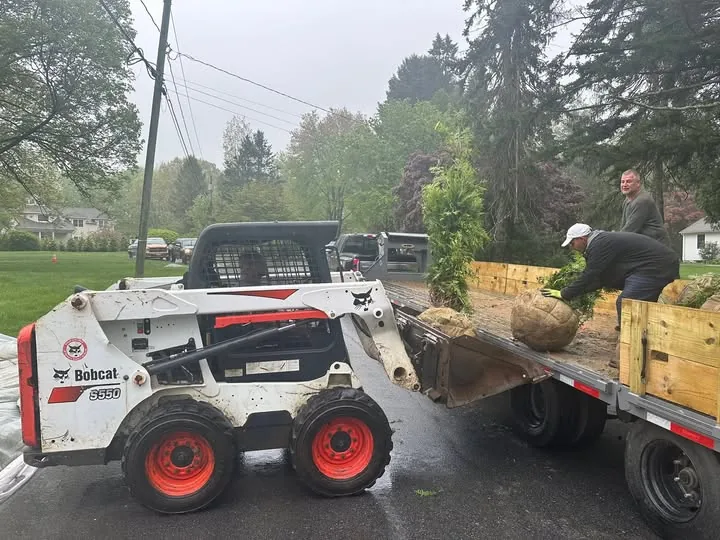
Specimen trees, shade trees and larger shrubs, delivered and set with machinery when the root balls call for it. Trees go in at the right depth with the root flare showing, and mulch stays off the trunk. No mulch volcanoes.
Plants chosen for Connecticut conditions
We favor native and coastal-tolerant plants that handle clay, salt and deer, and that still have structure, color or berries in February. A few that come up again and again:
- Inkberry holly, a native evergreen that tolerates wet clay and salt
- Northern bayberry, tough enough for the street edge where plow spray lands
- Winterberry, bright red berries on bare branches well into winter
- Summersweet, fragrant flowers in July and August when most shrubs are done
- Hellebore, evergreen leaves and flowers in February and March in shade
We don’t plant Japanese barberry or burning bush. Both are on Connecticut’s invasive list, and barberry has been banned from sale in the state.
Garden design for Connecticut clay and shade
Selecting foundation plantings and perennial gardens for Fairfield County properties requires matching root systems to heavy soil and low sunlight. In wet clay that stays cold well into May, inkberry holly provides an evergreen backbone along foundations where traditional boxwood struggles with root rot. Along driveways and street curbs, northern bayberry withstands winter road salt and plow spray without burning. Winterberry holds bright red berries on bare branches through midwinter snow, and summersweet produces fragrant blooms in July and August after early-summer shrubs have finished flowering.
For perennial borders, we build hardy combinations using catmint, false indigo, ornamental onion, little bluestem, and switchgrass, turning to shade-tolerant hellebores for reliable foliage and early blooms under mature tree canopies. We leave ornamental grasses standing through winter to maintain structural interest and windbreak protection, cutting them back cleanly in early spring. To protect local woodlands, we do not plant Japanese barberry or burning bush, both of which are listed as invasive species in Connecticut.
Setting up beds that last
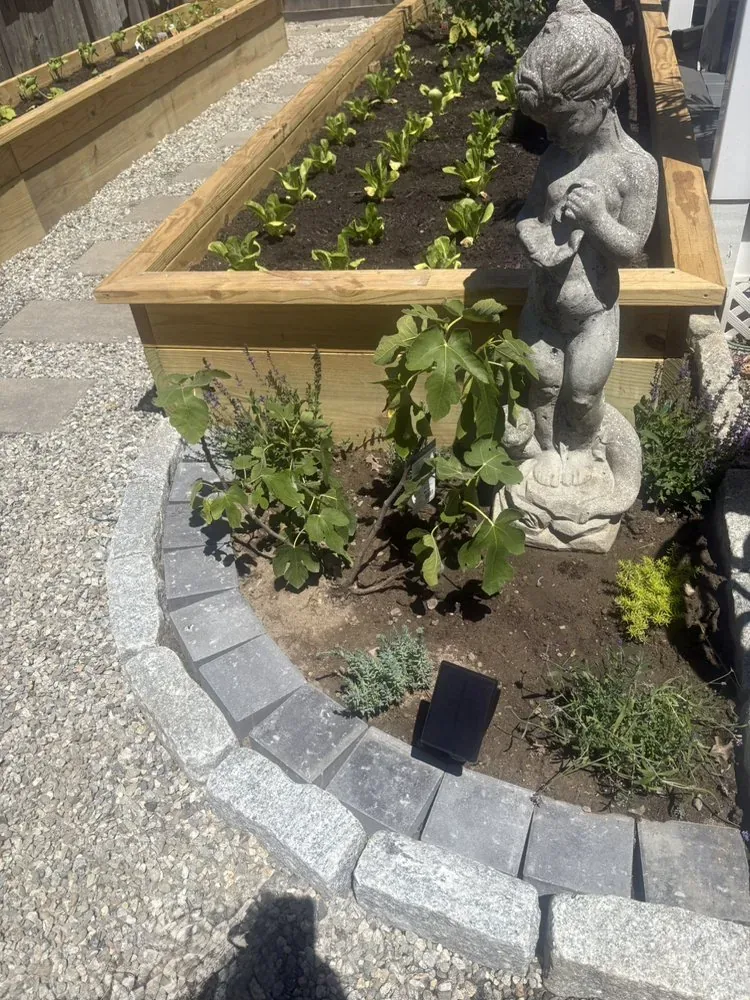
- Compost across the whole bed, not just the planting hole. Adding sand to clay can make it worse.
- Plant slightly high, an inch or two above grade, to keep crowns out of standing water.
- Mulch 2 to 3 inches deep, kept away from stems and trunks.
- Water deeply and less often for the first two summers, so roots grow down.
- Fix the water first. If a bed sits wet, a drain or regrading will do more than any plant choice.
How a planting job runs
A foreman walks the property with you and looks at sun, soil, slope and deer traffic. You get a planting plan and one fixed written proposal, usually within 3 business days. The same crew prepares the beds, plants and cleans up. Plantings we install and maintain are covered for one full season.
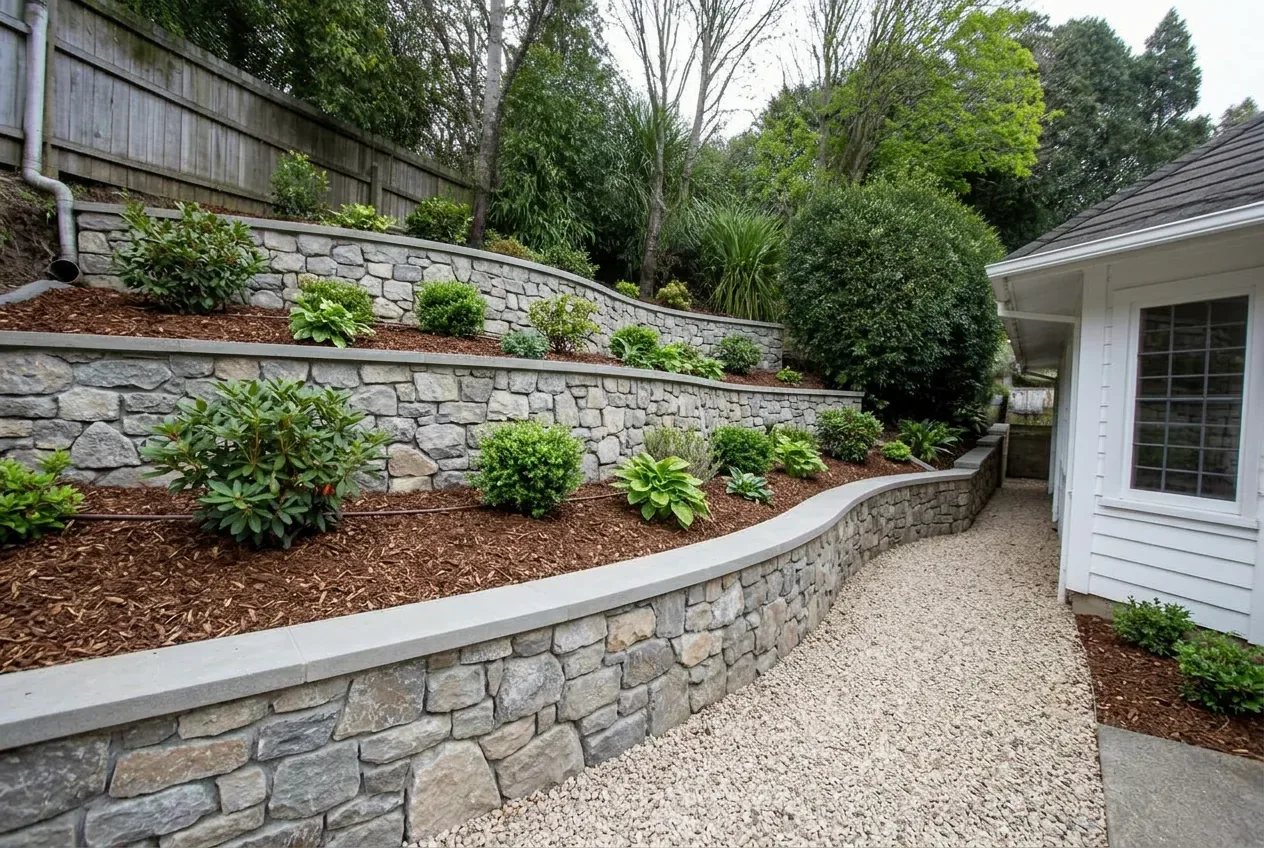
Planting pairs naturally with the rest of the yard. We can maintain the beds once they’re in, light a specimen tree, and plant above and below retaining walls so the stone settles into the garden.