
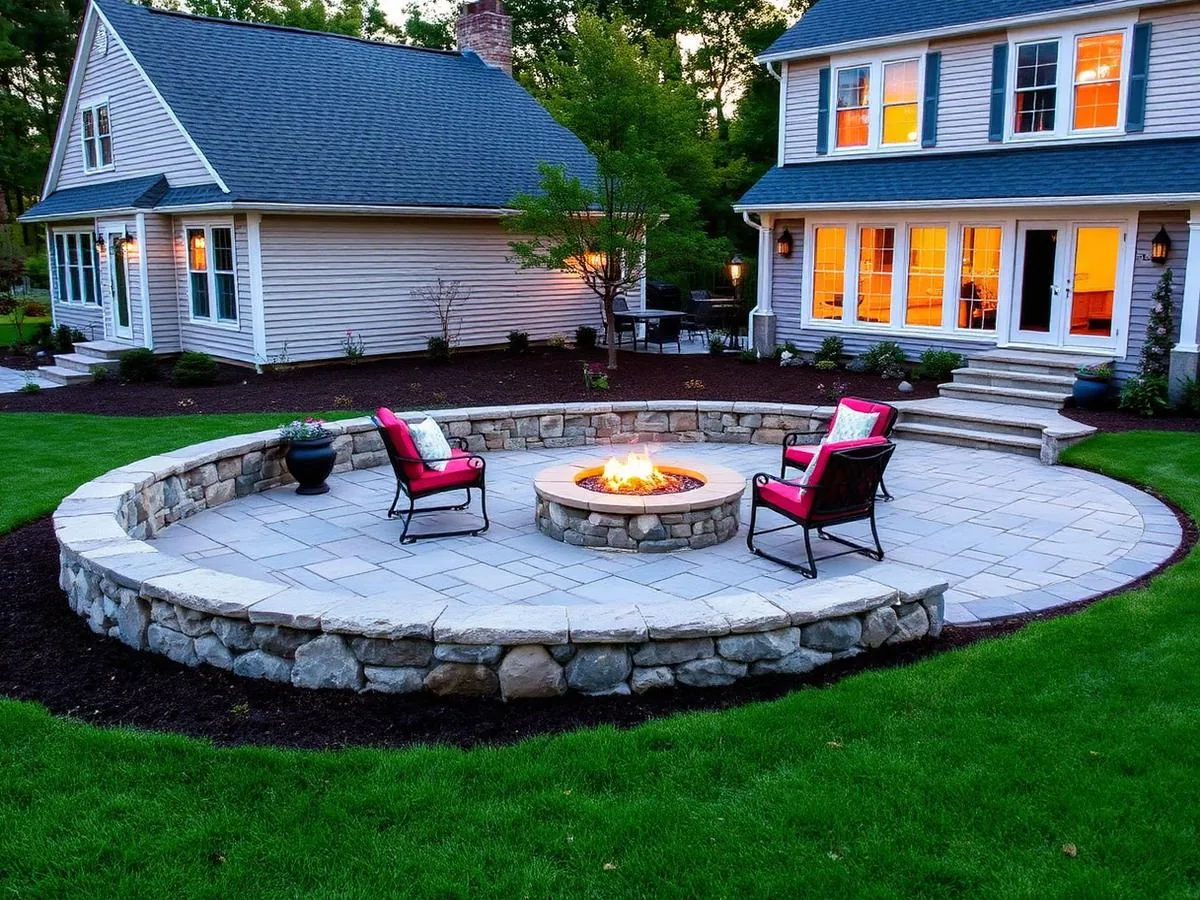
Almost every patio conversation we have in Norwalk starts with the same question: bluestone or pavers? It's a good question with an unsatisfying answer: it depends on your yard. The material that looks best in a catalog isn't always the one that looks best after five Connecticut winters, a few hundred pounds of rock salt and a maple tree dropping shade and seeds on it all summer.
Here's how we actually make the call, and where each material lets people down.
What you're really choosing between
Bluestone is a natural sandstone quarried mostly in Pennsylvania and New York. It comes in two common finishes. Thermal (flamed) bluestone has a flat, even surface and consistent thickness. Natural cleft has the split, slightly wavy face the stone came out of the ground with. Color runs from "blue-blue" select to "full color," which mixes in lilac, rust and green tones.
Concrete pavers are manufactured units made in molds under heavy pressure and vibration. They come in endless shapes and colors, including tumbled and textured styles designed to look like old stone. Each unit is the same thickness as the next, and they lock together over a compacted gravel base.
Both can make an excellent patio. Both can also fail badly. Installation decides the outcome far more than the material does.
Freeze-thaw: the real test in Connecticut
Our winters don't stay frozen. They freeze and thaw dozens of times, and every cycle forces water that has worked into a surface or joint to expand and then relax.
Bluestone is dense, but it's a layered stone. Natural cleft pieces in particular can spall (flake off in thin sheets) when water gets between the layers and freezes. Good-quality stone, properly sloped so water runs off, holds up for decades. Cheaper stone with visible seams, or stone laid flat so puddles sit on it, is where we see flaking by the third or fourth winter.
Pavers handle freeze-thaw well when the base is right. Because the system is flexible, a small amount of frost movement doesn't crack anything. The units can shift slightly and settle back. When a paver patio does fail, it's almost always because the base was too thin, not compacted in layers, or built on soil that holds water.
Mortared patios are the category we see fail most often, whichever stone is on top. A rigid concrete slab under mortar joints can't flex, so Connecticut frost eventually cracks the joints, water gets in, and the cracking speeds up. Mortar-set work can last when the slab is built properly with good drainage, but it needs repointing over time, and people should know that going in.
Salt air and de-icing salt
Living near the Sound, people worry about salt air. Honestly, the salt that damages patios comes out of a bag, not off the water.
- Rock salt (sodium chloride) speeds up spalling on bluestone and can wear the surface of concrete pavers, exposing the aggregate and dulling the color.
- Calcium magnesium acetate (CMA) and plain sand for traction are much gentler on both materials.
- On any new patio, skip de-icers entirely for the first winter if you can.
If your patio sits next to a driveway that gets salted, or it's the path to the back door that you'll be de-icing all winter, that matters more than how close you are to the water.
Shade, moss and slippery surfaces
Many Fairfield County backyards are wooded, and north-facing patios under oaks and maples stay damp most of the year. Moss and algae follow.
- Natural cleft bluestone holds moisture in its texture and gets slick when algae takes hold. It looks beautiful, but in deep shade we steer people toward thermal bluestone or a textured paver.
- Pavers grow moss too, especially in the joints. Polymeric joint sand cuts down on weeds and moss in the joints, but it won't keep the surfaces clean.
- In both cases, good slope (about 1/8 to 1/4 inch per foot away from the house) and some sunlight make more difference than the material.
Heat underfoot
Dark bluestone in full afternoon sun gets hot, too hot for bare feet around a pool. Lighter-colored pavers, or a lighter bluestone blend, stay noticeably cooler. If the patio faces south or west with no shade, this should factor into your choice.
Where each one disappoints
Bluestone disappoints when:
- It's a budget stone with seams and soft layers that flake after a few winters.
- It's laid in full sun around a pool and nobody can walk on it in July.
- Natural cleft goes in under heavy shade and turns into a skating rink.
- Thickness varies from piece to piece and the installer didn't bed it carefully, leaving trip edges.
Pavers disappoint when:
- The base was rushed, leaving dips and rutting within a couple of years.
- Color fades as the surface wears, especially on cheaper lines exposed to rock salt.
- A white haze (efflorescence) shows up in the first season. It's a natural mineral bloom, usually temporary, but it surprises people.
- Polymeric sand was installed wet or left on the surface, leaving a haze that's hard to remove.
- The style was chosen from a small sample and looks too "manufactured" across 400 square feet.
The base matters more than the surface
Whatever goes on top, a patio is only as good as what's under it. On most residential patios we excavate below the topsoil and install several inches of compacted processed gravel in thin layers (lifts), with a leveling course on top. On clay, low ground or anywhere near a downspout, we go deeper and plan where the water goes. For a patio that will carry vehicles, the base gets thicker still.
Shortcuts on the base don't show on day one, but they show in year three. It's also why stone patio prices vary: most Norwalk stone patios land between $28 and $55 per square foot, depending on the stone, base depth, grading and access.
How we usually recommend
There's no single rule, but here's roughly how we make the call:
- Formal front walk or classic Colonial: thermal bluestone, dry-laid on a proper base, or mortar-set on a well-built slab if the look calls for it.
- Big family patio, budget-conscious, heavy use: quality concrete pavers with a well-built base and polymeric sand.
- Shaded, damp backyard: thermal bluestone or a textured paver. Avoid natural cleft.
- Pool surround in full sun: a lighter paver or light-toned stone.
- Driveway or anywhere that gets salted: pavers rated for vehicle traffic, and a gentler de-icer.
Talk it through on site
Your yard's sun, soil and slope decide this more than any brochure. If you're weighing bluestone against pavers, a Norwalk foreman can walk the space with you, look at drainage and exposure, and give you an honest recommendation, free.