A puddle that shows up after every rain, a strip of lawn that never dries, water in the basement after a storm: these are among the most common calls we get in Fairfield County. The most common mistake we see is someone installing a drain before figuring out where the water is coming from. A French drain in the wrong spot is an expensive way to move a puddle three feet.
So every drainage job starts with diagnosis. We find the source, then build the smallest fix that actually solves it.
Where standing water comes from
- Roof water. Gutters and downspouts dumping at the foundation or onto a flat spot.
- Surface runoff. Water sheeting off a driveway, a patio, the street or a neighbor’s higher lot.
- Poor grade. Ground that is flat or slopes the wrong way, so water has nowhere to go.
- Groundwater or poor soil. Heavy clay, ledge or a high water table that won’t let water soak in.
Each one has a different fix, and many yards have more than one.
What we install
French drains
A perforated pipe in a gravel trench, wrapped in filter fabric, that intercepts water moving through the soil and carries it away. Curtain drains like this are the answer for groundwater and wet clay, and for slopes that push water toward the house. A French drain needs somewhere lower to discharge, so we plan the outlet before we dig the trench.
Dry wells
An underground chamber that collects water, usually from downspouts, and lets it soak into the surrounding soil. A properly sized dry well works well where soils drain reasonably. Before recommending one, we check how fast the ground actually drains. On clay or a high water table, a dry well can fill and stay full.
Regrading
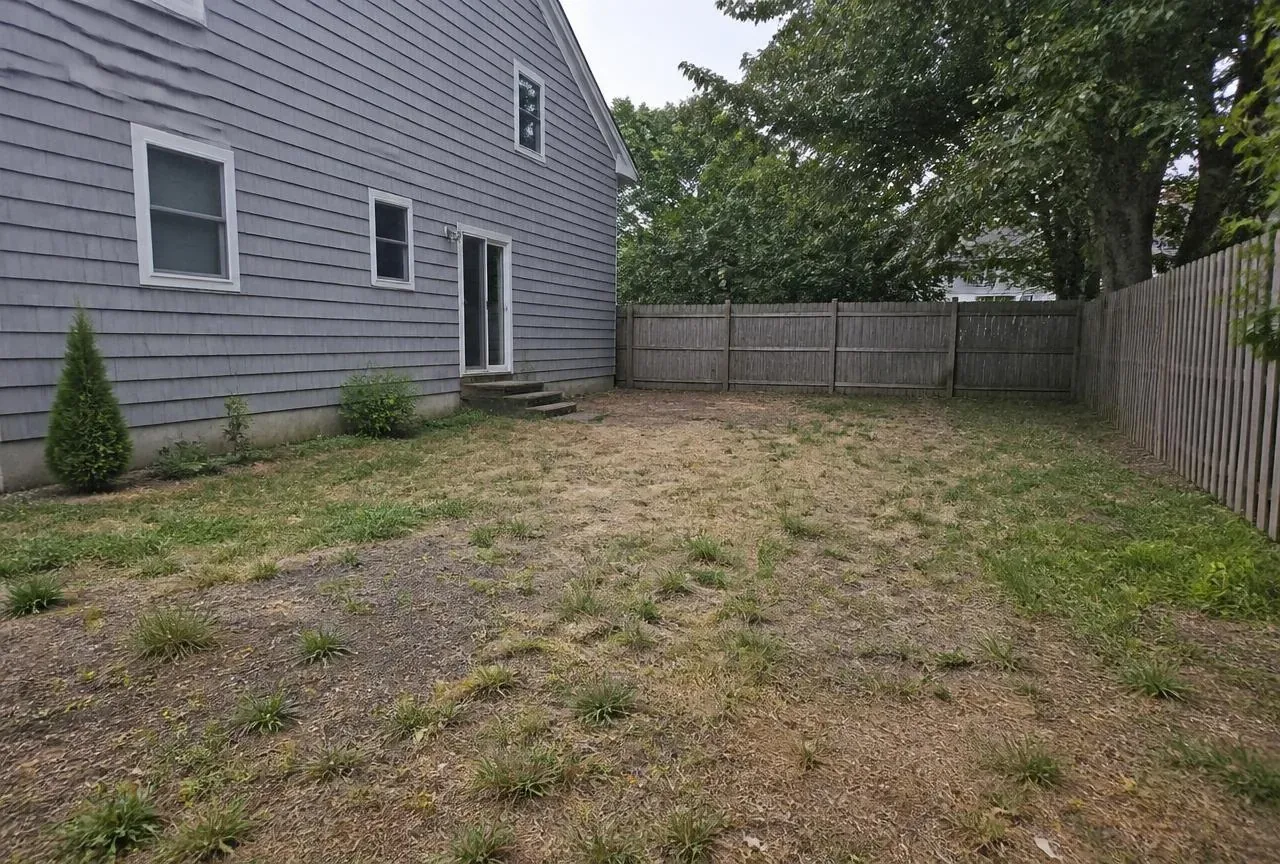
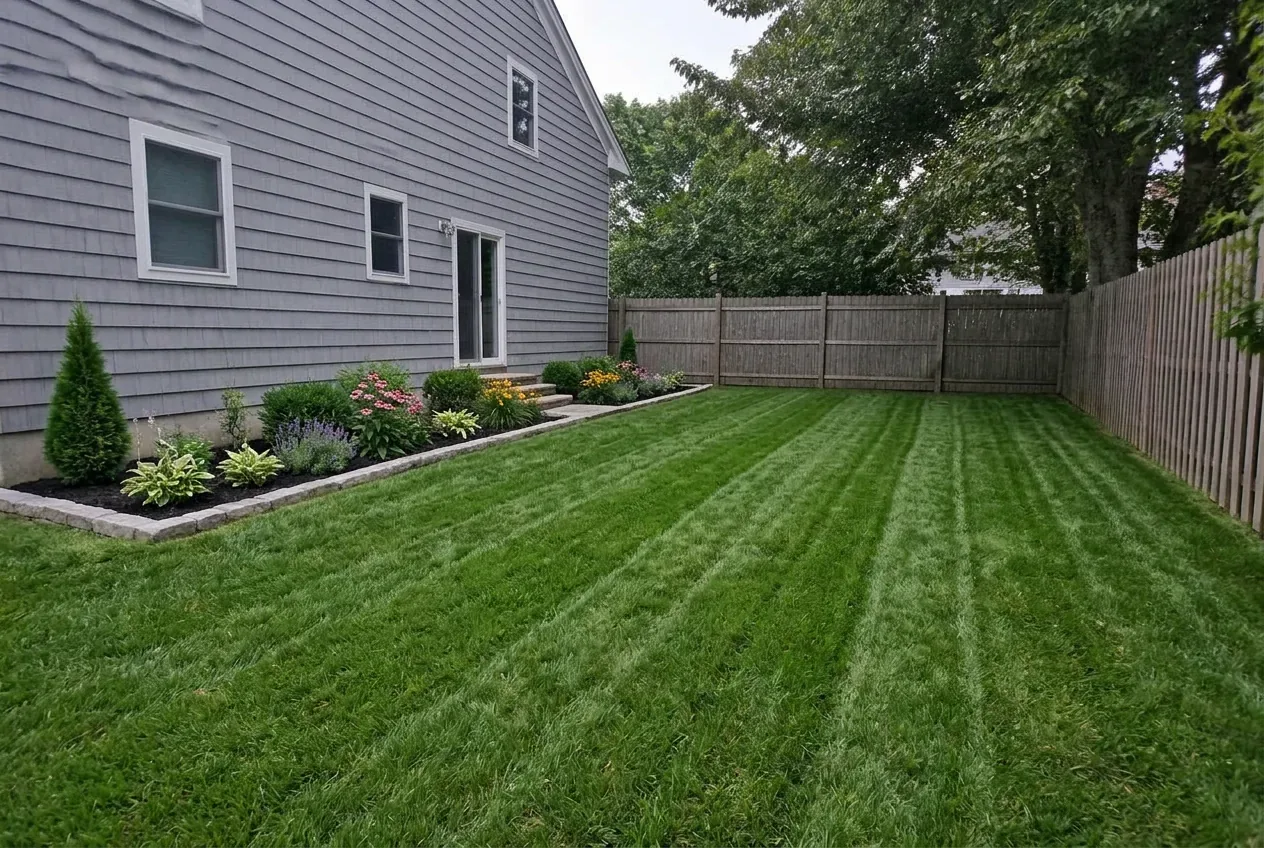
Reshaping the ground so it falls away from the house and toward somewhere the water can go. Building codes generally call for at least 6 inches of fall over the first 10 feet. Regrading is often the most effective and least expensive fix, and it’s the base for any lawn renovation like our backyard renovation.
Downspout tie-ins
Many “yard drainage” problems turn out to be one downspout emptying onto a flat spot. We extend downspouts well away from the house or pipe them underground to daylight at a lower point or into a dry well. Buried downspout lines often get crushed or clogged with roots and leaves, so old ones are worth checking with a hose before anything new is built.
Catch basins, swales and channel drains
For surface water, a shallow grassed swale or a dry creek bed can intercept and redirect runoff. A channel drain across the bottom of a driveway catches water before it reaches the garage. Catch basins collect water at low spots and feed it into pipe.
Fairfield County conditions
- Coastal and low-lying properties often have a high water table, which limits anything that relies on water soaking in.
- Ledge is common. Shallow bedrock can block drainage and changes what’s practical to dig.
- Clay holds water and drains slowly, which is why so many yards here stay soggy days after a storm.
- Wetlands and watercourses have their own rules. If there’s a stream, pond or wetland near the work, the town’s wetlands office may need to review it first.
Try this before you call
Walk the property in the next real rainstorm and take photos of where water enters, where it collects and which way it flows. Run a hose into each gutter and see where the water comes out. Our guide to standing water after storms walks through the full three-step check with a hose, a string and a line level. Bring the photos to the site walk and we’ll get to the answer faster.
How a drainage job runs
A foreman walks the property with you, checks grades and looks at your photos. You get one fixed written proposal, usually within 3 business days, that explains what we found and what we’ll build. The same crew does the work and cleans up the site every night.
Drainage ties into almost everything else we build. It sits behind every retaining wall, under every patio, and it decides whether a lawn or planting bed thrives.